Witches, We Have a Problem: Stop Starving the Shops That Built Our Community

The modern witchcraft, Pagan and metaphysical community has never been more visible. WitchTok reaches millions of people, Facebook groups appear by the thousands, Etsy is overflowing with spiritual products, and nearly anyone can create a page, call themselves a teacher and begin selling candles, readings, spell kits, courses or magical supplies. Yet while witchcraft has become more visible than ever, many of the metaphysical shops, authors, nonprofits, teachers and longtime practitioners that actually built and sustained these communities are struggling to survive. That should concern every witch, Pagan, occultist and metaphysical practitioner, because the community we enjoy today did not begin with TikTok, Facebook or social-media influencers. It was built by people who spent years, and sometimes entire lifetimes, studying the Craft, writing books, preserving traditions, teaching beginners, organizing gatherings, forming covens, opening metaphysical shops and creating places where people could finally find others like themselves.
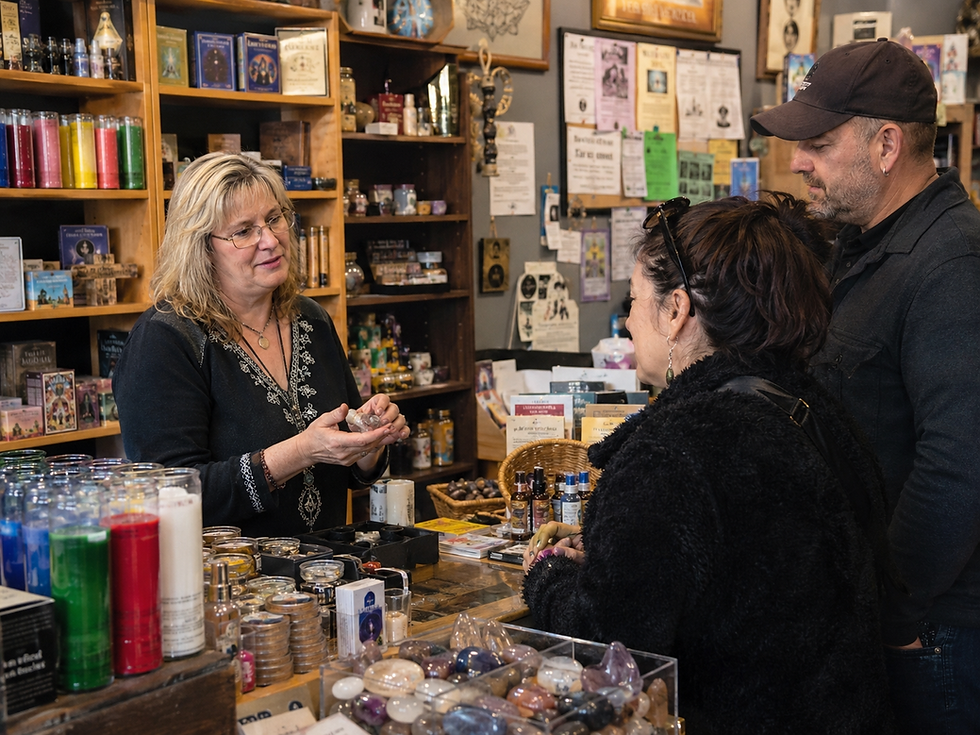
Metaphysical shops have always been far more than places to buy candles, herbs, crystals, incense, tarot decks and witchcraft supplies. For generations, they have served as some of the backbone and heartstrings of the Pagan and witchcraft community. In many towns, the local metaphysical shop was the first place a new practitioner could walk through the door and ask questions without being laughed at or judged. It was where someone bought their first serious book on witchcraft, found their first tarot deck, learned about herbs, discovered a local Pagan gathering, met a teacher or found other practitioners living nearby. Shop owners often spent hours answering questions, recommending books, sharing knowledge, promoting local readers and teachers, organizing classes and helping people find circles, covens and community events. Many of those shop owners were practitioners long before they were retailers. They did not simply see crystals trending online and decide there was money to be made. They opened these spaces because they believed the community needed them.
The same is true for many online metaphysical businesses. Supporting community does not only mean shopping within a certain number of miles from your home. Many online metaphysical shops are operated by experienced practitioners who educate people, publish articles, organize virtual communities, promote authors and teachers and make spiritual supplies available to people who may live hundreds of miles from the nearest physical witchcraft store. What matters is whether the businesses we support are putting something back into the metaphysical community or simply extracting money from the latest spiritual trend. If a shop, whether physical or online, is creating education, supporting practitioners, preserving knowledge and helping keep the community connected, then supporting that business helps support the larger ecosystem that keeps modern witchcraft alive.
Somewhere along the way, however, we began confusing social-media visibility with community contribution. WitchTok is not the witchcraft community. Facebook groups are not the witchcraft community. Follower counts are not the witchcraft community, and going viral does not automatically make someone an elder, teacher or authority. Social media has done wonderful things for isolated practitioners and has made information about Paganism, witchcraft, tarot, herbalism and metaphysical spirituality easier to find, but an algorithm cannot replace a community. A person with 200,000 followers may have been practicing for two years, while the owner of a small metaphysical shop may have spent thirty years quietly teaching, organizing and helping thousands of people without ever becoming famous online. We have to stop assuming that whoever is the loudest, newest or most viral is automatically the person doing the most for the Craft.
Too many ego-driven personalities and outright grifters have entered modern witchcraft and transformed spiritual practice into a competition for attention. Everyone wants to be an influencer. Everyone wants followers. Everyone wants to teach a class, sell a course, offer readings, create spell oils, pour candles or open an Etsy store. There is nothing wrong with witches and Pagan practitioners making money from their skills or creating independent businesses. In fact, independent makers, authors, readers, herbalists and craftspeople have always been an important part of the metaphysical economy. The problem begins when everybody wants to be a seller while nobody wants to be a customer. An economy cannot survive if every person is standing behind a table asking everyone else to buy something while refusing to purchase anything themselves.
That is the uncomfortable problem facing the witchcraft economy today. Everyone tells people to support small businesses, but too often that message really means, ‘Support my small business.’ Practitioners want people to purchase their candles, oils, jewelry, readings and handmade products, while turning around and buying their own spiritual supplies from whichever giant marketplace can save them two dollars. Others refuse to purchase anything from fellow practitioners because they insist they can make everything themselves. There is absolutely nothing wrong with making your own magical tools. Self-sufficiency has always been part of many spiritual traditions. But we cannot expect everyone else to become our customer while refusing to ever become somebody else's customer. If every witch becomes a seller and nobody is willing to buy, the witch economy eventually collapses. Money has to circulate. Support has to circulate. Resources have to circulate. That is how communities remain alive.
We also need to confront the growing expectation that metaphysical knowledge should always be free. Accessibility is important, and people should not be deliberately prevented from learning simply because they have limited financial resources. But accessibility and entitlement are not the same thing. Authors deserve to sell books. Teachers deserve to be compensated for classes. Readers deserve to be paid for readings. Artists deserve to sell their work. Herbalists deserve compensation for years of learning and experience. Shop owners deserve customers, and nonprofits deserve donations and community support. Too often someone will walk into a metaphysical shop, spend forty-five minutes asking questions about herbs, candles, crystals, spellwork or tarot, receive years of accumulated knowledge from the person behind the counter, and then pull out their phone to order the product somewhere else because it costs a dollar or two less. That may save a few dollars today, but repeated thousands of times across the country it destroys the very places providing that knowledge.
The same issue exists with authors. Much of the witchcraft information circulating across TikTok, Facebook, Instagram and blogs did not magically appear on the internet. Someone researched it. Someone studied the folklore. Someone interviewed practitioners. Someone documented a tradition. Someone spent years writing the book that another person later condensed into a sixty-second video. If we care about preserving witchcraft knowledge, we need to credit the people who did that work and support independent Pagan and metaphysical authors by purchasing their books when we can. A community that constantly consumes knowledge while refusing to support the people creating and preserving it eventually loses those creators.
Our nonprofits and community organizations matter just as much. They may not produce flashy viral content, but they often perform the work that actually holds communities together. They organize gatherings, create educational programs, preserve local Pagan history, maintain meeting spaces, help vulnerable community members, host events, build partnerships and perform the endless administrative work required to keep organizations alive. A viral WitchTok creator can disappear tomorrow. A strong nonprofit or community organization can continue serving people for decades. Yet too often these organizations struggle for volunteers and donations while thousands of dollars flow toward whatever personality or spiritual product happens to be trending that week.
Supporting the metaphysical community does not mean anyone needs to spend money they do not have. It does not mean purchasing expensive crystals or filling your home with unnecessary spiritual products. Support can be small. Buy your incense from the shop that has answered your questions for years. Order your next tarot deck from an independent metaphysical business. Purchase a book from the author whose work you regularly quote. Pay for a class when you can afford it. Attend the event. Donate five dollars to the nonprofit. Leave a positive Google review. Share the shop's website. Recommend the local witchcraft store when someone asks where to find spiritual supplies. Bring a friend through the door. Small purchases and small acts of support multiplied across thousands of practitioners can be the difference between a community institution surviving and disappearing.
We spend a great deal of time in witchcraft talking about reciprocity, energy exchange, intention and giving back. Perhaps it is time we apply those principles to the communities that made our practices possible. Community does not survive because people click a heart button. It survives because people invest in one another. It survives because someone buys the book, someone attends the class, someone shops at the metaphysical store, someone volunteers for the nonprofit and someone financially supports the people doing the work. A like is helpful. A share is helpful. But a business cannot pay rent with Facebook reactions, an author cannot survive on compliments and a nonprofit cannot run programs on emojis.
Before WitchTok, before Facebook groups and before witchcraft became a marketable social-media aesthetic, people were already doing this work. They were opening occult and metaphysical shops when doing so could make them targets in their communities. They were publishing books when Pagan and witchcraft topics were far less socially accepted. They were forming covens, organizing festivals, teaching classes and preserving traditions without the promise of followers, viral videos or sponsorship deals. They gave isolated practitioners somewhere to go and someone to talk to. They built the foundation that today's enormous online witchcraft community now stands upon.
So before spending another fifty dollars because a WitchTok personality told you that you absolutely need the newest magical product, look around at the people who are actually keeping your community alive. Find the metaphysical shop. Find the Pagan author. Find the independent witchcraft business. Find the longtime practitioner. Find the teacher. Find the nonprofit. Find the organizers who are quietly doing the work while everyone else fights for attention online, and when you are able, support them.
Because when a metaphysical shop closes, we lose more than shelves of crystals and candles. We lose knowledge, connections, gathering places, teachers, introductions, history and community infrastructure. When an author stops writing because nobody buys the books, we lose knowledge. When a nonprofit closes because nobody supports it, we lose programs and gathering spaces. When experienced practitioners finally give up because everyone wants their knowledge but nobody values their work, we lose another link in the chain that brought the Craft to us in the first place.
WitchTok did not build this community. Facebook did not build this community. Algorithms did not build this community. People did. Shops did. Authors did. Teachers did. Covens did. Nonprofits did. Organizers did. Generations of practitioners did. If we want the witchcraft, Pagan and metaphysical community to remain alive for the generations that come after us, then it is time we remember who keeps it alive and start supporting them.


Comments