Why Books Aren’t Enough: The Living Craft of Witchcraft, Tradition, and Learning

Updated: Aug 26
Written by Marty Mullenax - Bull and Thorn

Witchcraft has always been a living, evolving practice — one passed through hands, breath, lineage, land, and experience. Books have become essential tools in the modern magical revival, opening doors that once were available only through covens, families, or local practitioners. But no matter how well-written a book may be, it can never teach everything.
This article explores why book learning is not enough, weaving together the insights of modern authors, historical traditions, folk-magic lineages, and contemporary magical schools to show how witchcraft must be practiced, not merely read.
I. The Limits of Book-Based Magic
Witchcraft Is Experiential — Not Only Intellectual
A book can describe a ritual, but it cannot give you the felt sense of raising energy, sensing presence, hearing the subtle shift in the room, or witnessing a spell “take” in the physical world.
As Doreen Valiente once wrote:
“Witchcraft is not taught merely with words; it is learned with the senses, with the intuition, with the body.”
Similarly, Christopher Penczak, author of The Temple of Witchcraft series, notes:
“Reading a spell is nothing like doing a spell. Practice is the true initiation.”
Books give form, but personal practice gives life.
Books Cannot Adapt to Context
Real witchcraft depends on individual variables:
Your land
Your ancestry
Your emotional and energetic makeup
The spirits you work with
The practical resources available to you
Traditional cunning folk adjusted every charm to context — something a printed page cannot do.
Emma Wilby, historian of British cunning folk, observed:
“No two practitioners worked their magic in precisely the same way. Practice was adapted to the needs of the client and the circumstances of the moment.”
Mentorship Transmits Nuance That Books Cannot
The craft was historically taught through:
Apprenticeship
Household transmission
Coven mentorship
Village specialists
Folk healers, charmers, and midwives
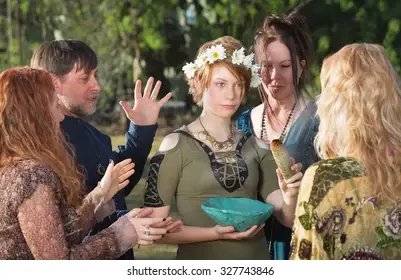
These relationships transmitted knowledge that cannot be written — tone, timing, spiritual dangers, and the “feel” of magic.
Oberon Zell-Ravenheart says in Grimoire for the Apprentice Wizard:
“A teacher can show you in five minutes what you might spend five years searching for in books.”
Books Cannot Offer Feedback — or Correction
A beginner may misinterpret:
Grounding
Circle casting
Energy raising
Deity or spirit contact
Protection practices
A teacher or community can correct these misunderstandings before they root into unhelpful or unsafe habits.
Witchcraft Has Oral and Mystical Layers
Many traditions hold that no text can capture the “inner mysteries.”
Starhawk writes in The Spiral Dance:
“Some things can be spoken; others must be danced or experienced. Witchcraft, ultimately, is lived.”
Historical Evidence: Witchcraft Was Always Learned in Person
Cunning Folk (British and European Folk Magicians)
Cunning folk rarely wrote detailed instructions. Their craft was:
Learned through apprenticeships
Passed down family lines
Shared through whispered charms and practical demonstrations
One cunning woman in 19th-century Cornwall said, when asked why she didn’t write her secrets in a book:
“You would not hear them right from a page.”
Their magic involved gesture, tone of voice, timing, and personal power, none of which are preserved perfectly in writing.
The Witch-Cult Revival & Coven Traditions
Gerald Gardner received witchcraft instruction in person, through ritual, from members of the New Forest coven. Regardless of the debates over historical accuracy, the structure of Gardnerian and Alexandrian initiation demonstrates an important point:
The Mysteries require physical experience
Ritual is participatory
Initiations convey energy as well as knowledge
As Janet Farrar wrote:
“Initiation is not a ceremony of words, but a transmission of power.”
Folk Magic Lineages Worldwide
Many cultural magical systems — Appalachian granny magic, Italian stregheria, Afro-Caribbean traditions, Indigenous spiritualities, and Slavic folk practices — rely heavily on oral and lived transmission.
A Sicilian magara interviewed in the early 20th century said:
“Magic cannot be learned from a book. You learn it from watching, from doing, from living with it.”
Books can record, but they cannot teach lineages.
What Modern Authors Say About the Limits of Books
Oberon Zell-Ravenheart
Founder of the Grey School of Wizardry
“A book may begin the journey, but practice is what makes a Wizard.”
Starhawk (Reclaiming Tradition)
Website: https://www.starhawk.org
“Witchcraft is a craft. It is something you learn by doing.”
Byron Ballard (Appalachian folk magic author)
Website: https://myvillagewitch.com
“The land teaches you things no book ever will. If your magic is not grounded where your feet are, the words on the page won’t save you.”
Christopher Penczak
Founder of the Temple of Witchcraft (NH, USA)
Website: https://templeofwitchcraft.org
“Books are the foundation, but experience is the teacher.”
Raven Grimassi
Practitioner of Italian folk magic
“Witchcraft is a living tradition. Books capture its shadow, but the spirit resides in the living world.”
Modern Online Schools & Why They Exist
These schools arose precisely because books were not enough for most learners. Many offer:
Teacher feedback
Community discussion
Structured paths
Practice-based learning
Ritual labs or experiential lessons
Grey School of Wizardry
Founder: Oberon Zell-Ravenheart
Website: https://greyschool.org
Focus: Wizardry, eclectic magical disciplines, dozens of departments.
Temple of Witchcraft Mystery School
Founders: Christopher Penczak & others
Website: https://templeofwitchcraft.org
Focus: Mystery tradition training, initiatory path, ritual practice.
Sacred Wheel Academy
Website: https://sacredwheelacademy.com
Focus: Wicca, divination, magical system training.
Modern Witch University
Founder: Devin Hunter
Website: https://modernwitchuniversity.com
Focus: Sorcery, psychic development, witchcraft foundations.
Witchcraft Academy by Mat Auryn (independent study content)
Website: https://matauryn.com
Focus: Energy work, intuition, psychic witchcraft.
These programs supplement books with guidance, structure, and experiential depth.
Recommended Authors & Books That Emphasize Practice
Foundational Authors
Doreen Valiente — Witchcraft for Tomorrow
Gerald Gardner — Witchcraft Today
Janet & Stewart Farrar — A Witches’ Bible
Starhawk — The Spiral Dance
Oberon Zell-Ravenheart — Grimoire for the Apprentice Wizard
Christopher Penczak — The Temple of Witchcraft series
Folk Magic & Cunning Craft
Emma Wilby — Cunning Folk and Familiar Spirits
Raven Grimassi — Italian Witchcraft / Old World Witchcraft
Byron Ballard — Staubs and Ditchwater (Appalachian folk magic)
Gemma Gary — Traditional Witchcraft series
Witchcraft Is a Living Craft
Books are gateways, companions, and incredible teachers — but only to a point.
A person can read every spell book and still never cast a spell successfully.
Witchcraft is:
Embodied
Sensory
Intuitive
Psychospiritual
Relational (to spirits, land, ancestors, and people)
Experiential
In the words of Scott Cunningham:
“The real lessons of magic come from practice, experience, and the living world around us.”
And as the cunning folk, witches, charmers, and healers of the past knew well:
Magic must be lived. Not merely read.
Continue Learning at Bull & Thorn
Keep exploring with these related guides and resources:


Comments